The night before a trial is a particularly poignant moment. I find I cannot organize what I am thinking for this post without some reference to antiquity, and recall those who also find it hard to sleep before such a battle.
The soliloquy Upon the King from Henry V comes to mind. As William Shakespeare imagined him, the King has a private moment the night before the Battle of Agincourt to reflect upon his role in the world.
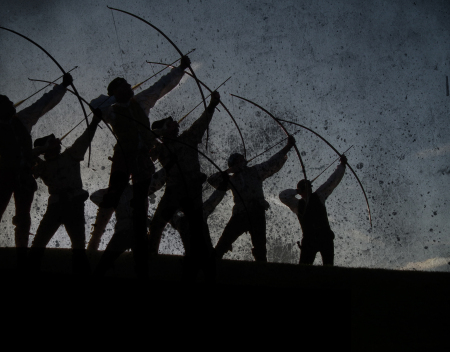
The King stands alone in some wood, and questions his place in humanity; why is it he that carries this burden on this night?
Is he not like other men? But for the ceremony of his office, he would merely be another archer or swordsman in the ranks. Lawyers on the morning of trial will appear in fine suits and briefcases rather than a crown and sword. In a world where conflict is a constant, are they not much the same?
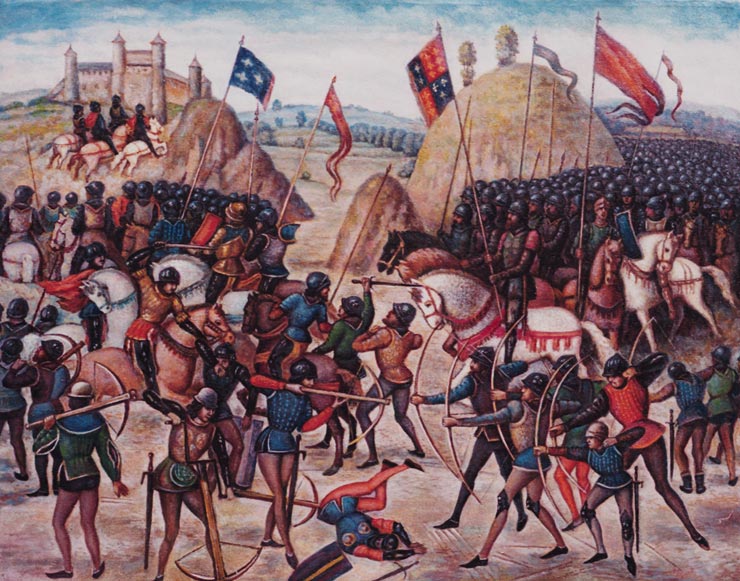
The issue tomorrow is not ownership of France, but instead a small tract of land in our county owned by a matriarch who has passed on.
Our opponent’s client is much like Lady Macbeth. I think about how much my innocent clients depend upon my skill, my experience, my drive and desire to do right by them. This was supposed to be their inheritance. Their needs and their expectations weigh upon me. The Bard’s words from Act V scene 1 of the play came to me as if by reflex.
Upon the king! let us our lives, our souls,
Our debts, our careful wives,
Our children and our sins lay on the king!
We must bear all. O hard condition,
Twin-born with greatness, subject to the breath
Of every fool, whose sense no more can feel
But his own wringing! What infinite heart’s-ease
Must kings neglect, that private men enjoy!

I have often wondered in this career what the ordinary, less dramatic or vigorous course might have brought. Perhaps take tickets at the ferry, or work as some auditor in some cubicle owned by the state and retire with the pension. O banality, where is thy sting?
What drew me to this profession? Like Henry V, I, Mark II, had a predecessor with the same office and name but one less roman numeral. So, it was paternity I suppose that drew me here. I regret that not.

And what have kings, that privates have not too,
Save ceremony, save general ceremony?
And what art thou, thou idle ceremony?
It falls to lawyers to sound the charge: “May it please the court, I am Mark II, representing the petitioner. The issues are joined, and we are prepared for trial.”
What kind of god art thou, that suffer’st more
Of mortal griefs than do thy worshippers?
What are thy rents? what are thy comings in?
O ceremony, show me but thy worth!
What is thy soul of adoration?
In all the pageantry of a trial court appearances few can decern whether what the assembled citizenry sees is false pretense or actual competence. History shows it is the same with Kings. Certainly, my blood is not royal, and instead my labor is that of a yeoman, like any other private man.
Art thou aught else but place, degree and form,
Creating awe and fear in other men?
Wherein thou art less happy being fear’d
Than they in fearing.
What drink’st thou oft, instead of homage sweet,
But poison’d flattery? O, be sick, great greatness,
And bid thy ceremony give thee cure!
Think’st thou the fiery fever will go out
With titles blown from adulation?
Like private men I prefer to think the results of the law courts to yield something greater than ourselves. Perhaps the furnace of cross examination really does separate truth from fiction, followed by application of the smelted result to which a wise reading of law, which with a dash of equity applied, to attain a purified jurisprudence. All of us, judge, jury, lawyers and their intrepid staffs are called to this goal.

But alone, like King Henry V, as we grasp the night before the trial, our fears creep upon us. In our individual role in the proceedings to come we might not distinguish ourselves from the litigants or their witnesses, and face ignominy.
No, thou proud dream,
That play’st so subtly with a king’s repose;
I am a king that find thee, and I know
‘Tis not the balm, the sceptre and the ball,
The sword, the mace, the crown imperial,
The intertissued robe of gold and pearl,
The farced title running ‘fore the king,
The throne he sits on, nor the tide of pomp
That beats upon the high shore of this world,
No, not all these, thrice-gorgeous ceremony,
But for ceremony of our attire, speech and conduct we are but ordinary men. The difference perhaps is experience; we answer for trial knowing what lies ahead.
Not all these, laid in bed majestical,
Can sleep so soundly as the wretched slave,
Who with a body fill’d and vacant mind
Gets him to rest, cramm’d with distressful bread;
Never sees horrid night, the child of hell,
The conduct of the trial and the likely testimony are never far from our minds.
But, like a lackey, from the rise to set
Sweats in the eye of Phoebus and all night
Sleeps in Elysium; next day after dawn,
Doth rise and help Hyperion to his horse,
And follows so the ever-running year,
With profitable labour, to his grave:
And, but for ceremony, such a wretch,
Winding up days with toil and nights with sleep,
Had the fore-hand and vantage of a king.
The slave, a member of the country’s peace,
Enjoys it; but in gross brain little wots
What watch the king keeps to maintain the peace,
Whose hours the peasant best advantages.
These days I never stop thinking about those who have died well before their time on battlefields not as memorable as Agincourt, but instead Superior Court. Struck down by stress, riddled with cancers or have fallen without warning by some seizure of the heart. Would a man with less ambition meet death in the same manner? Is peace not his constant rather than conflict?

On the morrow dawn will break. I shall put on my armor and take the field. I pray I shall order my conduct such that men may say of me his effort was not merely ceremony, but did yield tangible results.
Mark T. Patterson II, Attorney at Law
 Lawyers Road Review
Your men will follow you to whatever end, sire… Go get em!🛡
LikeLike
Lock and Load Experience.
LikeLiked by 1 person