There is nothing more delightful than Christmas in England. It is a peaceful time of joy and hope, and as I have come to believe, it is the experience of the British as a people that makes it so. This thesis has been long incubating in the back of my mind.
Christmas dinner two years ago was shared with family at their table in Nottingham, a truly pleasant evening without any holiday stress. Gifting occurs but it is not the banal rage of the American Holidays.

Almost every store is closed on Christmas, but everything is certainly closed on Boxing Day the 26th of December.
Before Christmas, and likely most of the month of December a carnival crowds into the main town square of Nottingham.

Walking around I noted a carousel – children laughing and riding the horse up and down, parents smiling and taking photographs as they see their offspring fly past and the carousel has music playing. Not an organ, nor anything holiday themed.
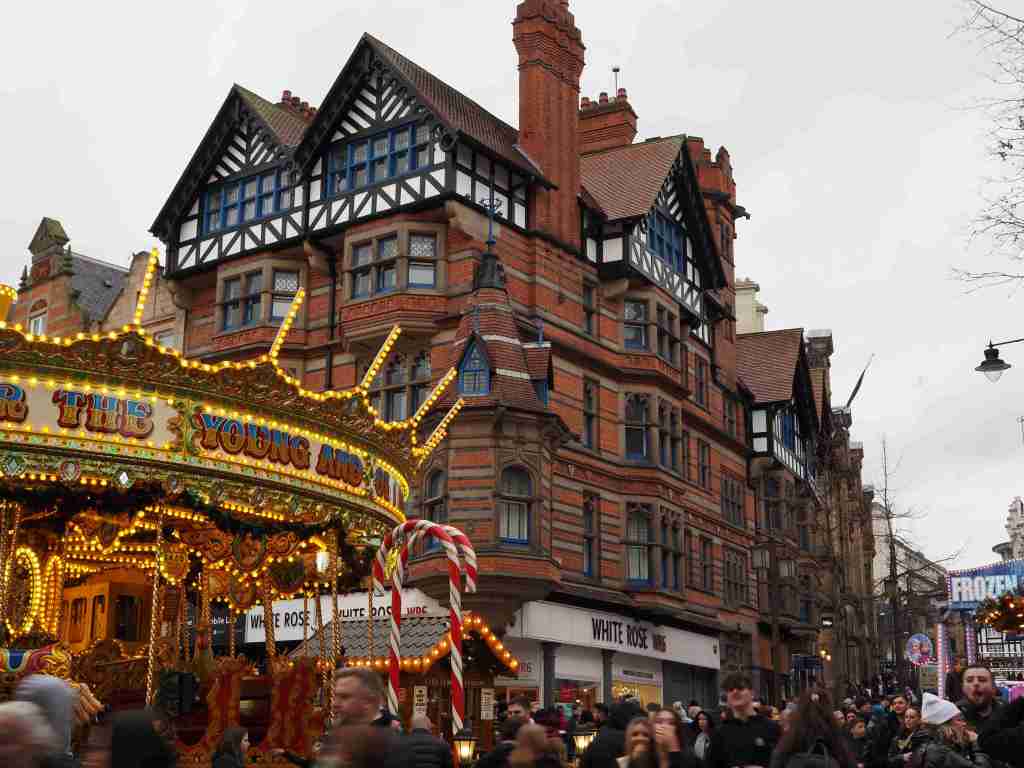
Instead, what is playing is the Dambusters March………what on earth does this have to with Christmas? I have discovered it is more to do with how the British see themselves, as opposed to any particular holiday.

The RAF 1943 mission to bomb dams in Germany, Operation Chastise, inspired the music for the 1955 film by the same name, The Dambusters.
This mission featured 18 Lancaster bombers crossing the enemy coast lead by RAF Wing Commander Guy Gibson. Specially fitted with huge bombs designed to skip across the surface of a lake formed by a dam in Germany, their bombs were to then blow up at the dam breaching the walls, drowning Germans and cutting electrical power to the Third Riech.

They were generally successful, yet only half the bombers returned to Britian. And yet the music is up beat, as if those who have lost their lives on this mission have fulfilled their role as citizens of the United Kingdom, and those who returned had the greater share of honor, but often short-lived. For example their leader Guy Gibson, for example does not survive the war, killed in another bombing raid.
What I have decided is this: there is something about the British attitude toward war that does not necessarily make this an inappropriate carousel accompaniment. They know they may have to die to defend the Relam, and there is no point in hiding it. Mostly they all know someone who has perished in war. Perhaps that is why the Christmas table and general experience there is more reverent, more thoughtful, than in the United States.
At some point in the 1980s or 1990s I had occasion to be acquainted with Janet Barclay – a woman residing in Canterbury England. Her first husband had been killed 2 days after D-Day in the British Army’s assault a Sword Beach in Northern France.
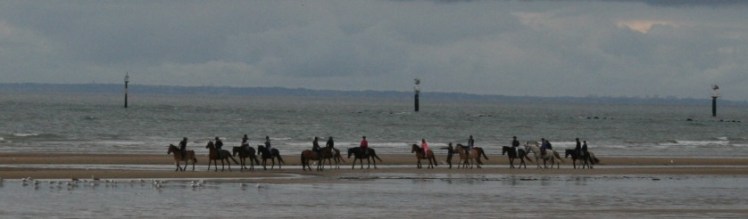
She married her second husband after the war. John Barclay had led Ugandan troops in Burma. At the time we had seen British troops deployed somewhere, the Balkans or perhaps the Middle East likely in tandem with forces of the United States, yet at that point in history the United Kingdom was a much smaller state than before during World War Two and earlier. Americans like to say they “punch above their weight”.
On this occasion Mrs. Barclay said to me, “You know, when we send our men off to war we simply have to accept they are not coming back”…
I suppose this sort of stoicism could be attributed to the severe scars of the First World War; the remembrances to the fallen there are everywhere in England, some temporary, most permanent.

The Tower of London, 2014. Thousands of ceramic poppies commemorate the outbreak of World War One, and the deaths of so many young Englishmen in Flanders Feilds.
Here is a famous poem about the experience:
In Flanders Fields, by John McCrae.
In Flanders fields the poppies blow
Between the crosses, row on row,
That mark our place; and in the sky
The larks, still bravely singing, fly
Scarce heard amid the guns below.
We are the Dead. Short days ago
We lived, felt dawn, saw sunset glow,
Loved and were loved, and now we lie,
In Flanders fields.
Take up our quarrel with the foe:
To you from failing hands we throw
The torch; be yours to hold it high.
If ye break faith with us who die
We shall not sleep, though poppies grow
In Flanders fields.
The flower of a generation was lost there, dying in waves where the poppies would grow. And yet reading as much of English history over time one gets the sense it has always been the case the people there really do have baked into the culture a sense their destiny lies with sacrifice the defense of the realm, and pray God save the King.
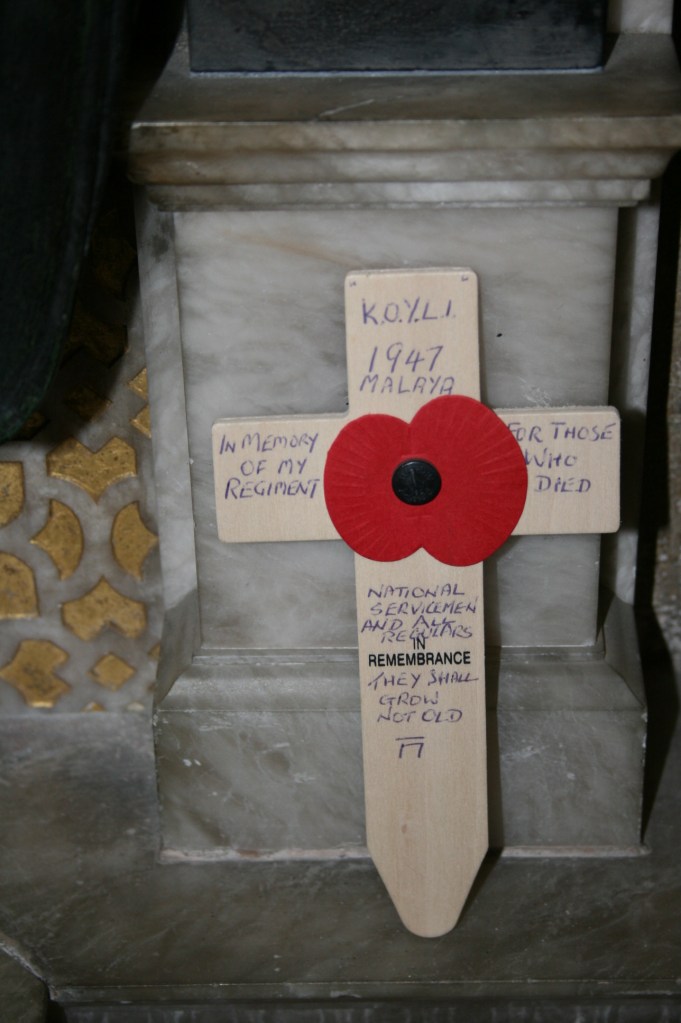
A personal memorial to a now forgotten deployment of Bristish forces in Maylasia.
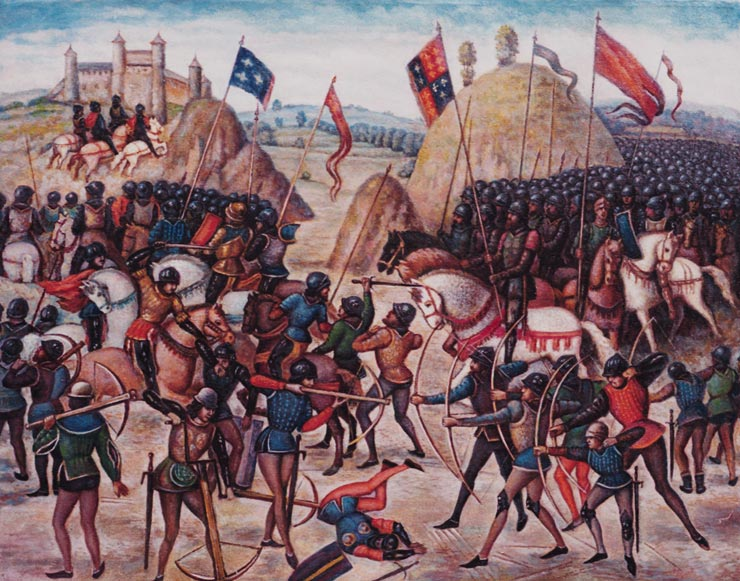
Consider as well Shakespeare’s lines he ascribed to King Henry V. The English army had invaded France to attempt to return provinces lost during the Plantagenet King period of their history. After some success, they are worn out.
It is October 24, 1415 and at Agincourt a huge French army stood between them and Calias, the port from which they could escape to England. Here is how the Bard put it in the year 1599:
WESTMORELAND. O that we now had here But one ten thousand of those men in England That do no work to-day!
KING. What’s he that wishes so? My cousin Westmoreland? No, my fair cousin; If we are mark’d to die, we are enow To do our country loss; and if to live, The fewer men, the greater share of honour.
God’s will! I pray thee, wish not one man more. By Jove, I am not covetous for gold, Nor care I who doth feed upon my cost; It yearns me not if men my garments wear; Such outward things dwell not in my desires. But if it be a sin to covet honour, I am the most offending soul alive.
No, faith, my coz, wish not a man from England. God’s peace! I would not lose so great an honour As one man more methinks would share from me For the best hope I have. O, do not wish one more! Rather proclaim it, Westmoreland, through my host,
That he which hath no stomach to this fight, Let him depart; his passport shall be made, and crowns for convoy put into his purse; We would not die in that man’s company That fears his fellowship to die with us. This day is call’d the feast of Crispian.
He that outlives this day, and comes safe home, Will stand a tip-toe when this day is nam’d, And rouse him at the name of Crispian. He that shall live this day, and see old age, Will yearly on the vigil feast his neighbours, And say ‘To-morrow is Saint Crispian.’ Then will he strip his sleeve and show his scars, And say ‘These wounds I had on Crispian’s day.’
Old men forget; yet all shall be forgot, But he’ll remember, with advantages, What feats he did that day. Then shall our names, Familiar in his mouth as household words- Harry the King, Bedford and Exeter, Warwick and Talbot, Salisbury and Gloucester- Be in their flowing cups freshly rememb’red.
This story shall the good man teach his son; And Crispin Crispian shall ne’er go by, From this day to the ending of the world, But we in it shall be remembered- We few, we happy few, we band of brothers; For he to-day that sheds his blood with me Shall be my brother; be he ne’er so vile, This day shall gentle his condition; And gentlemen in England now-a-bed Shall think themselves accurs’d they were not here, And hold their manhoods cheap whiles any speaks That fought with us upon Saint Crispin’s day.
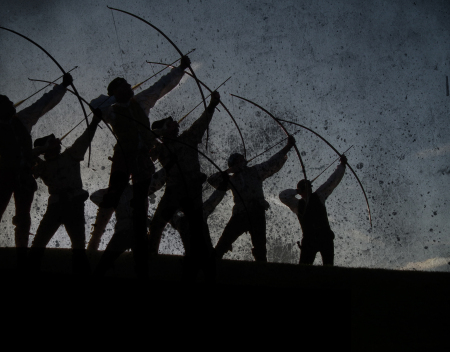
Perhaps it is the love for England at peace that those Britons who go abroad to fight for freedom do so willingly lest they hold their manhood’s cheap. They go to Defend the Realm. To protect what is so precious to them.
Like Christmas in England.
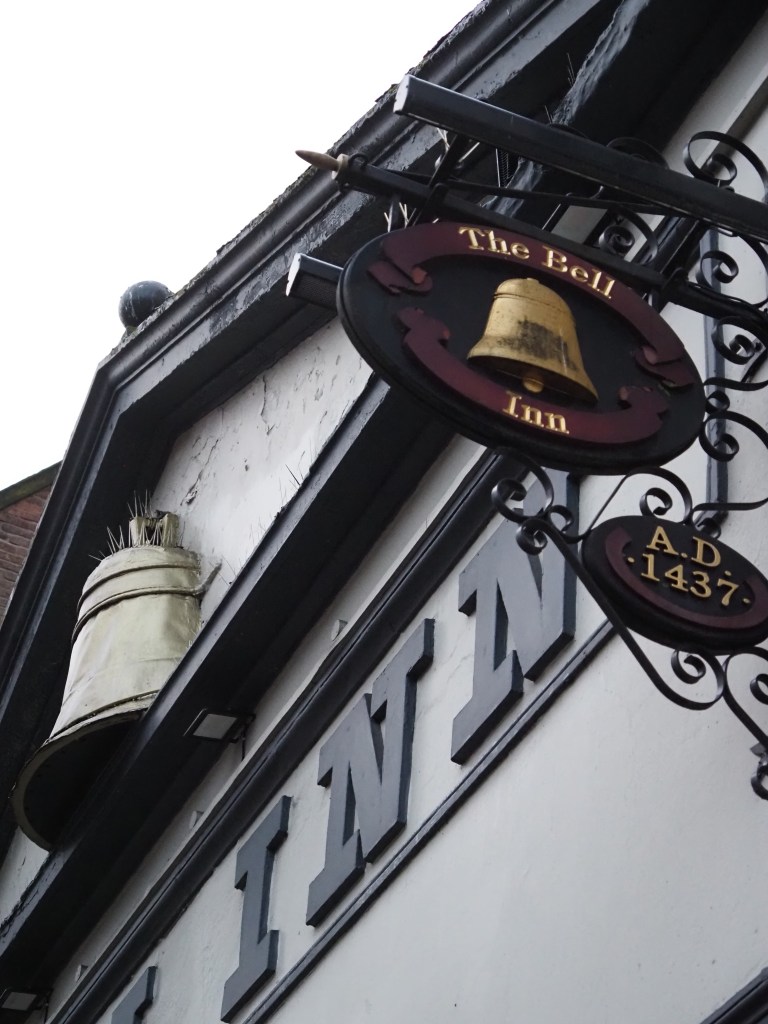
A Nottingham Christmas Morning, passing the Bell Inn
 Lawyers Road Review
Good one Mark. Merry
Christmas. I hope al is well with you.
LikeLike
Most informative, interesting post ever on this site! O Thank you very much.
LikeLike